I live for the in-between moments. The quiet mornings, the gentle unraveling of growth, the beauty tucked inside ordinary days. These are a few of the things that fill my heart.
Nokia D1C: awal Kebangkitan Raksasa Nokia
-
*Nokia D1C: awal Kebangkitan Raksasa Nokia* - Nokia D1C – Belum lama muncul
bocoran Android Nokia C1 & P1, kini kemunculan Nokia D1C di blog Geekbench
memp...
Pushing the Button
-
Current word count: 65,731 (In final revisions of my current manuscript.)
Song on my playlist: "Hey Ya" (The acoustic version by Obadiah Parker)
Drink of c...
Finding Solace in the Deep Waters Within
-
Despite some of my best efforts to resurface lately, my soul is persistent
in gently pulling me back down to the solace of the deep waters within. Is
it...
Your first day of 1st
-
Call me sentimental, call me silly... but weren't you just a little, tiny
baby? Wasn't it just yesterday that you laid in my arms, fitting perfectly
whil...
Life: It Goes On - September 14
-
Surprised to see me? Me, too. I hadn't meant to take any break at all, let
alone a six-week break. After I'd already been MIA a while, my email got
hacke...
PIECES OF YOU
-
What you left behind
lingers like radio waves
looking for a place to rest,
Like negative ions they seek
positive particles to
make ionic bonds...
holidays
-
I love the holidays, don't get me wrong, but at the same time they leave me
feeling more lonely and depressed. We have tons of get togethers with
family wh...
Penjual Pallet Plastik Harga Murah.
-
*Penjual Pallet Plastik Harga Murah*. Perusahaan kami menyediakan *pallet
plastik *dengan berbagai ukuran, jenis dan model sesuai dengan kebutuhan
anda. Uk...
Pallet Plastik Murah Meriah
-
*Pallet plastik* murah meriah - Kami mendistribusikan beberapa ukuran pallet
plastik Murah, tersedia Pallet baru maupun Pallet plastik bekas untuk
berbagai...
Too many good shows...
-
Too many tv apps...too little time...
My favorites lately~Limitless; Galavant; Elementary, Manhattan, Two Broke
Girls; Black Sails; Mercy Street; War and P...
Good Riddance (Time of Your Life) ~ Green Day
-
Dear Sweet Graduated Working Going to College Sweet Angel,
I can't believe this is where we are. I remember kindergarten graduation
like it was yesterday....
Seventh Son (2015) Watch Streaming
-
Play Movie *Seventh Son* in Top Quality. Watch Full Movie *Seventh Son* in
HD Quality. Online Streaming *Seventh Son* in Best Look Video Format.
Download...
Hamilton Beach TrueAir: Air flow Cleaners Reviewed
-
Would you like purchasing any cloak cleaner for your residence maybe
enterprise? If so, many individuals. Over the past number of years, air
cleaners conta...
Developing Love Relationships
-
Are relationships important in our life journey on this Earth? Absolutely!
A very special man and wise elder, John Red Hat, spoke to me about
relationships...
Snob cats
-
So I've been couponing for about 2 months now and I'm starting to notice
changes. One big thing that has happened is my crazy cats. I've been buying
name b...
All over
-
So I just wanted to update this and let everyone know that I’m now out of
that hell hole I called work. I handed my resignation in and yesterday was
my las...
You are true
-
You make me fall in love with you
Like no one else can ever do
This song's playing in my head
With every word you said.
Can't take you off my mind
You make ...
Canon EOS Rebel T5 Info
-
Canon EOS Rebel T5 18MP EF-S Digital SLR Camera USA warranty with canon
EF-S 18-55mm f/3.5-5.6 IS [Image Stabilizer] II Zoom Lens & EF 75-300mm
f/4-5.6 III...
Rudolph the Semi-Decapitated Reindeer
-
Yesterday, my husband suggested that instead of driving to the nearest
Redbox to return a movie that we had watched on New Year’s Eve (we are
super big par...
As you may have noticed, I haven't been posting on here much anymore. It seems my comments have been hijacked by spammers and I am disappointed by all this. I know that Blogger now offers a spam detection but I am closing this blog. I created a new place on Blogger and ask that you join me over at Mindful Moments as well as my inspirational blog, Chasing My Bliss. I look forward to sharing this journey forward with all of you. Thank you.
My intent for today is to remember to breathe as I release old habits and practice positive ones.
My inspiration came from an innocent conversation that Mikey and I had this morning about cereal. Max and Alex can eat their cereal whether it be dry or soggy and enjoy it in any form; whereas Mikey and myself will only eat it while it is slightly moist. Afterwards, I sat and reflected on this silly conversation which made me broaden my thoughts to the rest of my life. What in my life do I do by habit, and how are these habits serving me? I realized then that this was my intent for today, to change my perspective of the soggy cereal at the bottom of the bowl.
I shared a Zen Story on Chasing My Bliss. Would be curious to know what others understand from it. It seems that this one has been interpreted two different ways. I will keep my interpretation to myself so that I don't waver anyone's opinion.
My morning yoga session was The Dancing Sun Sequence from Namaste Yoga. This sequence combined standing poses with focus on Warrior II (Virabhadrasana II), Extended Triangle (Utthita Trikonasana), Revolved Triangle (Parivrtta Trikonasana) and Warrior 1 (Virabhadrasana I) to stimulate energy flow.
I practiced Kundalini Yoga Meditation this afternoon focusing on the Fifth Chakra (Vishuddha) which is located in the throat. The core need of the Throat Chakra is to find your voice and speak your truth. I thought it would benefit today's intent to locate my truth about my habits and help me find more creative ways to engage in more positive ones.
My intent for today is to close my eyes, breathe deeply and think positive, loving thoughts.
My inspiration came from the Four Sublime Abodes, Loving-kindness (metta), Compassion (karuna), Sympathetic Joy (mudita) and Equanimity (upekkha). These four attitudes are the ideal way of conduct towards all living beings (sattesu samma patipatti). They provide the answer to all situations arising from social contact. They are the great removers of tension, the great peace-makers in social conflict, and the great healers of wounds suffered in the struggle of existence.
I posted the Universal Love Prayer from the Metta Sutta on Chasing My Bliss in the spirit of the Four Sublime Abodes.
My morning yoga session was from Namaste Yoga and focused on Crane Pose (Bakasana); which although challenging, happens to be one of my favorites. The sequence that was put together leading up to and out of Crane was beautiful. After I completed the session, I played it over to just watch the "dance."
Today I meditated for 30 minutes on Loving Kindness (Metta) an unconditional, inclusive love, a love with wisdom. It has no conditions; it does not depend on whether one "deserves" it or not; it is not restricted to friends and family; it extends out to include all living being with no expectations of anything in return.
I began with loving myself (without a measure of this unconditional love and acceptance for ones self, it is difficult to extend it to others), then I included those who are special to me and finished with all living things. This meditation session has uplifted my spirits and has kept me journaling all day.
It has been a wonderful day filled with love and light. Namaste.
My intent for today is to honor my Nana's birthday by keeping her memories alive.
My inspiration for today came from the memories of my Nana. My Nana was an old soul, a kindred spirit, very in tune with the earth and very wise about the world. She taught me about life by showing me how to embrace nature. Today, would have been her 93rd birthday. I shared a few stories about how I know her spirit is still with me at Chasing My Bliss. She truly was an amazing woman who inspired all that she met.
Today to honor my Nana, I meditated for 20 minutes on Love. I started the meditation focusing on unconditional universal love, then visualized a fountain of love within my heart, pouring forth healing waters to nurture and support myself on this day of remembrance. Then I focused on self love and forgiveness of myself and others for all pains caused so I can heal. Finally I sent love to all those that I appreciate and reflected on the significance and meaning of love; in its origin, its expression, its qualities and its goal.
Happy Birthday, Nana. I miss you with all of my being with love and light until we meet again.
My intent for today is to choose love, joy and freedom, open my heart and allow wonderful things to flow into my life.
My inspiration came from the Divine Mother Prayer Dance. When praying to Divine Mother, this prayer dance is a powerful expression of devotion. You are using your body, mind, breath and heart; all in a harmony of celebration. Every aspect of that is a gift from Divine Mother, and when you show Her this prayer dance, She receives not only the gift of your prayer, but the understanding that you value these wonderful gifts. I posted it on Chasing My Bliss.
My morning yoga session was from Namaste Yoga and focused on the Warrior Poses. The three warrior poses commemorate the ideal that we as practitioners are the “spiritual warrior,” who bravely battle with the universal enemy, self-ignorance (avidya), the ultimate source of all our suffering. Behind each asana is a story, the story behind warrior pose can be found here.
My afternoon meditation was a traditional sit-down style to Delerium's Lumenis; a beautiful piece that worked perfectly to keep me focused while my children played in the other room. This song can be listened to here. Isabel Bayrakdarian has a beautiful voice that captures the moment and helps settle you into the right frame of mind.
I meant to make a post 2 days ago, when I completed Day 15 of the shred but life sometimes doesn't leave us time.
Lets start with the progress:
Weight: (Day 1) 130 lbs (Day 15) 126 lbs
Waist: (Day 1) 30 inches (Day 15) 27.75 inches
Hips: (Day 1) 35 inches (Day 15) 34.5 inches
Thighs : (Day 1) 21 inches (Day 15) 20.5 inches
Bust: (Day 1) 36 inches (Day 15) 32 inches
I am seeing a lot of progress with the shred and I am happy that I have stayed with it. At times it is difficult, especially on the knees and joints but with enough persistence you do see results. I am looking forward to seeing what others changes come during the last 15 days.
I also want to point out how amazing it is to see my body transform. Growing up, I never had a waist. I was built like a green bean, tiny and straight. Since having kids, I never realized the figure it has given me. My waist is now tiny with fuller hips and an hour glass figure that I can't wait to see at its best. I really need to thank my boys, they changed my body for the better!!
During the first week, I continued to eat like I normally do but I was tracking my intake on sparkpeople.com and seeing where my troubles came in. During the second week, I started correcting some of the problem areas with my eating style. I seem to have a hard time getting enough protein, fiber, iron and calcium. I am still adjusting and looking for ways to increase them. I also had to raise my calorie intake from 1200-1550 up to 1490-1840 to adjust with the calories I am burning. Not an easy feat when I don't usually consume many calories. One good thing is that it is forcing me to now eat breakfast. A meal I usually skip.
I did injure my ankle on Day 14 doing jumping jacks and pushed through Day 15. The following day I did take a break from the shred to give my ankle time to heal. Yesterday I started back up and although I thought my ankle was healed, the jumping jacks once again triggered the pain in my ankle. I will be modifying the rest of the shred to avoid more injury to my ankle.
I have also added some more to my workout days.
7 minutes of Tai Chi in the morning to stretch through the sore muscles and relax my body, mind and spirit.
30 minutes of Yoga with my boys to help teach them the practice.
20 minutes of Pilates to stretch my body and help tone my muscles.
and of course the 27 minutes of The Shred followed by a longer Stretch.
I will update again in 4 days when I move over to Level 3.
“The first step towards getting somewhere is to decide that you are not going to stay where you are.”
I turned 30 last May andfound myself in a depression coma from March of last year. It was a strong battle of growing up and noting that I didn't achieve as much as I wanted and/or planned before I turned 30. I thought the depression would dissipate after the big 3-0 came and although it did, I started slacking on my health. I figured, I had 3 kids, so what did it matter what I looked like? This worked for me.
Then in February I received the results to my physical and was told I had high cholesterol. Well if that didn't put me in enough of a funk, realizing that my 30 year young self had issues with cholesterol, what else could go wrong? So I started thinking about working out. Yup, thinking about it. I evenbecame motivated enough to WATCH fitness videos and root for the women breaking a sweat, while I sat comfy on my couch, reading and pigging out.
I let my body fall apart, taking my emotional well being with it... up until 12 days ago when I looked in the mirror and said, "Mandy, what the hell are you doing to yourself?" What message am I sending my children??
So, I took out the scale and measuring tape and recorded what I was embarrassed to share with anyone.
My weight: 130 lbs (Still safe BMI for my 5'3 stature, but kind of
round in the belly area of my tiny frame)
Waist: 30 inches
Hips: 35 inches (Boy, you might as well roll me with my hips and waist
being so close)
Thighs: 20 inches
Bust: 36 inches
Just looking at those numbers made me nauseous. I needed to do something, quick!!
So, I started Jillian Michael's 30 Day Shred on March 28, 2010.
The Shred is 30 days of circuit training divided by 3 levels. Each level is done for 10 days.
The first night on the shred, my kids started acting up when I was 15 minutes into it and panting like I was near death. I paused it to tell them to go back to bed and could not turn it back on. I felt sick to my
stomach and felt like the life was beaten out of me.
The next day, I ached!! I ached so much and went searching for information on how the shred works. (I didn't know then that this was a mini boot camp) I wanted to give up -- ON DAY 2!!! But, I sucked it
up and did my workout, this time completing all the way through. It became easier every day and I started looking forward to it and the 27 minutes of sweat. I started adding in Tai Chi and Yoga, as well as some walks with the kids to help loosen my sore muscles and gain more fitness minutes.
I did take a break from the workout the two days before Easter since I had to prepare but I didn't stop working out. I refused to become inactive. I still tracked plenty of fitness minutes and calories burned to make up for the missing shred exercise.
Last night, April 6 2010, I completed Day 10 of Level 1. I have already noticed decent results not only in measurements but in sleep quality as well as all over mental health.
I have not checked my weight since but I have checked my measurements.
My waist is NOW: 28 inches (lost 2 inches!!)
My hips are NOW: 34 inches (lost 1 inch!)
My thighs are NOW: 19-3/4 inch (1/4 of an inch...but still improvement)
My bust is NOW: 34 inches (back to normal!!)
I'm getting there and all this in 12 days...Technically, 10 days of the shred. I'm sure to hit my goals by the end of 30 days. Now it's time to start, Level 2. Right after, I put my boys to bed. Night All!!
Did a photo shoot with Alex today for fun and just wanted to share a few of my favorites. He is such a ham and so fun to take pictures of. Enjoy!! If you would like to view all of the photos, check out the album at http://share.shutterfly.com/action/welcome?sid=0AcMmLNuzaM2Tpw. Would love to hear your feedback. =)
I am frustrated. Actually, frustrated is an understatement. My son is in the first grade and has a learning disability, ADD, Anxiety and possible ODD. Last April I requested that the CST reevaluate my son for his psych evaluation and IQ test because his first results came back inconclusive because he refused to participate. The teacher wanted to hold him back in Kindergarten because of behavior concerns and the CST refused to give me anything more than a BASC test. The BASC test was enough for the pediatrician to confirm ADHD and start medicating my son this past August. He is now in the first grade (Thank you IEP for allowing me to decide whether to retain my child) and he started having problems with short term memory loss and a rocking tic. I took him to a neurologist who told me it was ADD not ADHD what we thought was hyper is actually anxiety. To confirm he wants my son to have a psych evaluation and IQ test. I contacted the CST and they are trying to tell me that they don't have to give him one because he isn't showing these outbursts in school. Of course he isn't!! He's MEDICATED during the day. If I took him off the meds, they would see. Plus I have last years reports from the teachers and the request from the neurologist. According to IDEA, the CST must reevaluate upon parental request. Why are they giving me a hard time? I am tired of jumping through hoops to get my son the services he needs to be the most he can be. Having a disability is hard enough. Having one that can't be treated because the school refuses to cooperate is bull****! Anyone have any advice, gone through something similar, etc... Please send some guidance my way. Thank you! =)
I was the girl that others liked to talk about but not say nice things.
I was the daughter parents wondered about where they went wrong.
I was the girlfriend that would do things for boyfriends so that they could never get too close emotionally/mentally.
I was the girl that hid under masks and facades looking for answers and hiding the real me under layers not allowing others to get close.
I was a girl looking for answers to life's most challenging questions while dumbing down for the outside world.
Shit, I was seen as the ditzy girl that always smiled, laughed and knew how to "party like a rock star." I would do foolish things and just live in the moment.....but not really live as ME. Well, I guess it was me, just....Fake!
I did many things to disappoint my parents. Drugs, parties, cutting school --hell I didn't even show up for college and I was there on scholarships, -- abusive boyfriends... I did a lot and I put my parents through a LIVING HELL.
It took me years to realize who I was. YEARS!! My parents tried everything with me. I used to swear they hated me. They could never understand how their "Smart Beautiful Daughter" could do these types of things and/or hang out with this crowd or be with this person.
How do you tell anyone when you can't even admit to yourself that you are afraid of what people will see you as if you showed them the real you. I did it once. My first true boyfriend, Mike. We had an extremely intense relationship. I don't mean sexual in any way. We were very very deep. We got each other. I was 16 years old (he was 18) and I had someone to share these deep conversations about everything from spirituality, the arts, philosophy to....pink elephants jumping over the moon. It was something anyone could wish for....who wasn't a teenager. We broke up because our relationship was too mature for us.
So what did I do? I built a wall. Being dumb seemed so easy! Mixing with the wrong crowds and having foolish relationships and partying just seemed like the way to get by. Since obviously my way didn't work.
Well, things got out of hand as they often do. I ended up with abusive relationship after abusive relationship. The last one the worst and it made my parents realize there was something wrong with me. They "forced" me to go to a mental hospital for a few days to see what could possibly be making me go through this.
I had the perfect home life. My sister and I were extremely close. My mother and I are exceptionally close. My dad and I had a decent relationship although (at the time) I only thought of him as a disciplinary.
Back to the story, I went in and was very angry with my parents for "making" me go through this. The anger built up from years of not knowing who the hell I was.
After this incident I started looking for myself for the first time since I was 16. Mike and I were still friends and we would discuss these things and it made me feel great to be this person again.
I would sit and talk to my Nana and she always told me to not regret my actions. Learn from them. So that's what I did. I LEARNED from them. I GREW from them. Most importantly, I now UNDERSTAND why I went through these things.
Psychiatrists told me it was a way to fill the void between my father and I. That since I wanted to be a Daddy's girl I would act out because it was the only attention I got. I believed it for years.... until I figured it out on my own.
I wasn't trying to fill any void with a relationship with anyone other than myself. I did these things because I hated the persona I was living. I never allowed people to get to know the real me. Only one person did....and I hated that I was shy/embarrassed call it whatever you would like.....
I wanted the world to see me for MORE than what I put out there.
When I had my oldest son, I changed my way of life even more and have really had a lot of personal growth. Due to cafemom and goodreads, I have made friends that I probably would have never had the guts too in real life.
Yes, I was a troubled girl but it was all a way to find myself. I'm okay with that. It's my past. It has strengthened my character. It makes me look at things in a way I never thought I could. I look at my children and sometimes I could see them slipping into what they think others want them to be and I try my hardest to let them be free of this.
My mother used to cry and wonder what she did wrong. How did she fail me. I always told her it wasn't her fault. She raised me with the best of morals. She taught me the difference between right and wrong. She was the ideal mother. The mother that I wanted to be. It took years for her to realize she didn't fail me. To see that I ended up on the path that she willed for me. I just hit a few paths where I took the scenic route and forgot about the mission at hand. It feels good to have her respect and admiration. It makes me feel wonderful that my parents admire my parenting. I'm in awe that they no longer refer to me as "the bad one." They look at me now and they see the real me. The me that I hid for over 10 years on a journey where all I was trying to do...was escape myself.
Life isn't easy. No one can say it is. But, I can offer one piece of advice as my Nana did for me.
Her's ~Live life without regrets.
I will add to hers ~ Don't make life more difficult by denying others your true identity. Love yourself and share who you really are. Those who should be in your life will embrace you with open arms and those that don't...you will see were never meant to be there in the first place. When you do this, life is beautiful! Just like mine is today. Despite the drama and heartache, I am happy because I am living it, being true to myself.
"If I had a flower for everytime I thought of you...I could walk through my garden forever."~ Alfred Lord Tennyson
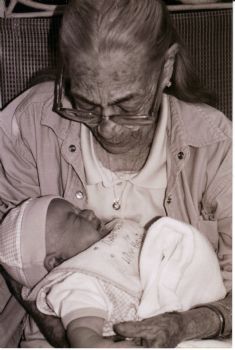
It's been six years and it still hurts as if it was yesterday. You are in my thoughts and you live on through our memories. You will always be my favorite four leaf clover. I love you, Nana.
Down syndrome (DS), also called Trisomy 21, is a condition in which extra genetic material causes delays in the way a child develops, both mentally and physically. It affects about 1 in every 800 babies.
The physical features and medical problems associated with Down syndrome can vary widely from child to child. While some kids with DS need a lot of medical attention, others lead healthy lives.
Though Down syndrome can't be prevented, it can be detected before a child is born. The health problems that can go along with DS can be treated, and there are many resources within communities to help kids and their families who are living with the condition.
About Down Syndrome
Normally, at the time of conception a baby inherits genetic information from its parents in the form of 46 chromosomes: 23 from the mother and 23 from the father. In most cases of Down syndrome, a child gets an extra chromosome 21 — for a total of 47 chromosomes instead of 46. It's this extra genetic material that causes the physical features and developmental delays associated with DS.
Although no one knows for sure why DS occurs and there's no way to prevent the chromosomal error that causes it, scientists do know that women age 35 and older have a significantly higher risk of having a child with the condition. At age 30, for example, a woman has about a 1 in 900 chance of conceiving a child with DS. Those odds increase to about 1 in 350 by age 35. By 40 the risk rises to about 1 in 100.
How Down Syndrome Affects Kids
Kids with Down syndrome tend to share certain physical features such as a flat facial profile, an upward slant to the eyes, small ears, and a large or protruding tongue.
Low muscle tone (called hypotonia) is also characteristic of children with DS, and babies in particular may seem especially "floppy." Though this can and often does improve over time, most children with DS typically reach developmental milestones — like sitting up, crawling, and walking — later than other kids.
At birth, kids with DS are usually of average size, but they tend to grow at a slower rate and remain smaller than their peers. For infants, low muscle tone may contribute to sucking and feeding problems, as well as constipation and other digestive issues. Toddlers and older kids may have delays in speech and self-care skills like feeding, dressing, and toilet teaching.
Down syndrome affects kids' ability to learn in different ways, but most have mild to moderate intellectual impairment. Kids with DS can and do learn, and are capable of developing skills throughout their lives. They simply reach goals at a different pace — which is why it's important not to compare a child with DS against typically developing siblings or even other children with the condition.
Kids with DS have a wide range of abilities, and there's no way to tell at birth what they will be capable of as they grow up.
Medical Problems Associated With DS
While some kids with DS have no significant health problems, others may experience a host of medical issues that require extra care. For example, almost half of all children born with DS will have a congenital heart defect.
Kids with Down syndrome are also at an increased risk of developing pulmonary hypertension, a serious condition that can lead to irreversible damage to the lungs. All infants with Down syndrome should be evaluated by a pediatric cardiologist.
Approximately half of all kids with DS also have problems with hearing and vision. Hearing loss can be related to fluid buildup in the inner ear or to structural problems of the ear itself. Vision problems commonly include amblyopia (lazy eye), near- or farsightedness, and an increased risk of cataracts. Regular evaluations by an audiologist and an ophthalmologist are necessary to detect and correct any problems before they affect language and learning skills.
Other medical conditions that may occur more frequently in kids with DS include thyroid problems, intestinal abnormalities, seizure disorders, respiratory problems, obesity, an increased susceptibility to infection, and a higher risk of childhood leukemia. Upper neck abnormalities are sometimes found and should be evaluated by a physician (these can be detected by cervical spine X-rays). Fortunately, many of these conditions are treatable.
Prenatal Screening and Diagnosis
Two types of prenatal tests are used to detect Down syndrome in a fetus: screening tests and diagnostic tests. Screening tests estimate the risk that a fetus has DS; diagnostic tests can tell whether the fetus actually has the condition.
Screening tests are cost-effective and easy to perform. But because they can't give a definitive answer as to whether a baby has DS, these tests are used to help parents decide whether to have more diagnostic tests.
Diagnostic tests are about 99% accurate in detecting Down syndrome and other chromosomal abnormalities. However, because they're performed inside the uterus, they are associated with a risk of miscarriage and other complications.
For this reason, invasive diagnostic testing previously was generally recommended only for women age 35 or older, those with a family history of genetic defects, or those who've had an abnormal result on a screening test.
However, the American College of Obstetrics and Gynecology (ACOG) now recommends that all pregnant women be offered screening with the option for invasive diagnostic testing for Down syndrome, regardless of age.
If you're unsure about which test, if any, is right for you, your doctor or a genetic counselor can help you sort through the pros and cons of each.
Screening tests include:
Nuchal translucency testing. This test, performed between 11 and 14 weeks of pregnancy, uses ultrasound to measure the clear space in the folds of tissue behind a developing baby's neck. (Babies with DS and other chromosomal abnormalities tend to accumulate fluid there, making the space appear larger.) This measurement, taken together with the mother's age and the baby's gestational age, can be used to calculate the odds that the baby has DS. Nuchal translucency testing is usually performed along with a maternal blood test.
The triple screen or quadruple screen (also called the multiple marker test). These tests measure the quantities of normal substances in the mother's blood. As the names imply, triple screen tests for three markers and quadruple screen includes one additional marker and is more accurate. These tests are typically offered between 15 and 18 weeks of pregnancy.
Integrated screen. This uses results from first trimester screening tests (with or without nuchal translucency) and blood tests with second trimester quad screen to come up with the most accurate screening results.
A genetic ultrasound. A detailed ultrasound is often performed at 18 to 20 weeks in conjunction with the blood tests, and it checks the fetus for some of the physical traits abnormalities associated with Down syndrome.
Diagnostic tests include:
Chorionic villus sampling (CVS). CVS involves taking a tiny sample of the placenta, either through the cervix or through a needle inserted in the abdomen. The advantage of this test is that it can be performed during the first trimester, between 8 and 12 weeks. The disadvantage is that it carries a slightly greater risk of miscarriage as compared with amniocentesis and has other complications.
Amniocentesis. This test, performed between 15 and 20 weeks of pregnancy, involves the removal of a small amount of amniotic fluid through a needle inserted in the abdomen. The cells can then be analyzed for the presence of chromosomal abnormalities. Amniocentesis carries a small risk of complications, such as preterm labor and miscarriage.
Percutaneous umbilical blood sampling (PUBS). Usually performed after 20 weeks, this test uses a needle to retrieve a small sample of blood from the umbilical cord. It carries risks similar to those associated with amniocentesis.
After a baby is born, if the doctor suspects DS based on the infant's physical characteristics, a karyotype — a blood or tissue sample stained to show chromosomes grouped by size, number, and shape — can be performed to verify the diagnosis.
Getting Help
If you're the parent of a child diagnosed with Down syndrome, you may at first feel overwhelmed by feelings of loss, guilt, and fear. Talking with other parents of kids with DS may help you deal with the initial shock and grief and find ways to look toward the future. Many parents find that learning as much as they can about DS helps alleviate some of their fears.
Experts recommend enrolling kids with Down syndrome in early-intervention services as soon as possible. Physical, occupational, and speech therapists and early-childhood educators can work with your child to encourage and accelerate development.
Many states provide free early-intervention services to kids with disabilities from birth to age 3, so check with your doctor or a social worker to learn what resources are available in your area.
Once your child is 3 years old, he or she is guaranteed educational services under the Individuals with Disabilities Education Act (IDEA). Under IDEA, local school districts must provide "a free appropriate education in the least restrictive environment" and an individualized education plan (IEP) for each child.
Where to send your child to school can be a difficult decision. Some kids with Down syndrome have needs that are best met in a specialized program, while many others do well attending neighborhood schools alongside peers who don't have DS. Studies have shown that this type of situation, known as inclusion, is beneficial for both the child with DS as well as the other kids.
Your school district's child study team can work with you to determine what's best for your child, but remember, any decisions can and should involve your input, as you are your child's best advocate.
Today, many kids with Down syndrome go to school and enjoy many of the same activities as other kids their age. A few go on to college. Many transition to semi-independent living. Still others continue to live at home but are able to hold jobs, thus finding their own success in the community.
Warning Signs and Symptoms of Abusive Relationships
If you think your spouse or partner is abusive, or you suspect that someone you know is in an abusive relationship, review the red flags and other information on domestic abuse and violence covered in this article. Not all abuse involves physical threat; emotional abuse can also leave deep and lasting scars. Recognizing the warning signs and symptoms of spousal abuse is the first step, but taking action is the most important step in breaking free.
Domestic violence and abuse
Special note:
Stressful economic times trigger more instances of spousal abuse. To learn about reducing stress in your relationship, see Managing Relationship Stress
Domestic abuse, also known as spousal abuse, occurs when one person in an intimate relationship or marriage tries to dominate and control the other person. An abuser doesn’t “play fair.” He or she uses fear, guilt, shame, and intimidation to wear you down and gain complete power over you. He or she may threaten you, hurt you, or hurt those around you. Domestic abuse that includes physical violence is called domestic violence.
Victims of domestic abuse or domestic violence may be men or women, although women are more commonly victimized. (Note:this article will use the pronoun “he” for convenience only) This abuse happens among heterosexual couples and in same-sex partnerships. Except for the gender difference, domestic abuse doesn’t discriminate. It happens within all age ranges, ethnic backgrounds, and financial levels. The abuse may occur during a relationship, while the couple is breaking up, or after the relationship has ended.
Despite what many people believe, domestic violence is not due to the abuser’s loss of control over his behavior. In fact, violence is a deliberate choice made by the abuser in order to take control over his wife or partner.
Violent Behavior is an Abuser's Choice
Reasons we know an abuser's behaviors are not about anger and rage:
He does not batter other individuals - the boss who does not give him time off or the gas station attendant that spills gas down the side of his car. He waits until there are no witnesses and abuses the person he says he loves.
If you ask an abused woman, "can he stop when the phone rings or the police come to the door?" She will say "yes". Most often when the police show up, he is looking calm, cool and collected and she is the one who may look hysterical. If he were truly "out of control" he would not be able to stop himself when it is to his advantage to do so.
The abuser very often escalates from pushing and shoving to hitting in places where the bruises and marks will not show. If he were "out of control" or "in a rage" he would not be able to direct or limit where his kicks or punches land.
Spousal abuse and battery are used for one purpose: to gain and maintain total control over the victim. In addition to physical violence, abusers use the following tactics to exert power over their wives or partners:
Dominance — Abusive individuals need to feel in charge of the relationship. They will make decisions for you and the family, tell you what to do, and expect you to obey without question. Your abuser may treat you like a servant, child, or even as his possession.
Humiliation — An abuser will do everything he can to make you feel bad about yourself, or defective in some way. After all, if you believe you're worthless and that no one else will want you, you're less likely to leave. Insults, name-calling, shaming, and public put-downs are all weapons of abuse designed to erode your self-esteem and make you feel powerless.
Isolation — In order to increase your dependence on him, an abusive partner will cut you off from the outside world. He may keep you from seeing family or friends, or even prevent you from going to work or school. You may have to ask permission to do anything, go anywhere, or see anyone. Source: Domestic Abuse Intervention Project, MN
Threats — Abusers commonly use threats to keep their victims from leaving or to scare them into dropping charges. Your abuser may threaten to hurt or kill you, your children, other family members, or even pets. He may also threaten to commit suicide, file false charges against you, or report you to child services.
Intimidation — Your abuser may use a variety of intimation tactics designed to scare you into submission. Such tactics include making threatening looks or gestures, smashing things in front of you, destroying property, hurting your pets, or putting weapons on display. The clear message is that if you don't obey, there will be violent consequences.
Denial and blame — Abusers are very good at making excuses for the inexcusable. They will blame their abusive and violent behavior on a bad childhood, a bad day, and even on the victims of their abuse. Your abuser may minimize the abuse or deny that it occurred. He will commonly shift the responsibility onto you: Somehow, his violence and abuse is your fault.
Domestic abuse falls into a common pattern, or cycle of violence:
Abuse — The abuser lashes out with aggressive or violent behavior. The abuse is a power play designed to show the victim "who is boss."
Guilt — After the abusive episode, the abuser feels guilt, but not over what he's done to the victim. The guilt is over the possibility of being caught and facing consequences.
Rationalization or excuses — The abuser rationalizes what he's done. He may come up with a string of excuses or blame the victim for his own abusive behavior—anything to shift responsibility from himself.
"Normal" behavior — The abuser does everything he can to regain control and keep the victim in the relationship. He may act as if nothing has happened, or he may turn on the charm. This peaceful honeymoon phase may give the victim hope that the abuser has really changed this time.
Fantasy and planning — The abuser begins to fantasize about abusing his victim again, spending a lot of time thinking about what she's done wrong and how he'll make her pay. Then he makes a plan for turning the fantasy of abuse into reality.
Set-up — The abuser sets up the victim and puts his plan in motion, creating a situation where he can justify abusing her.
The Full Cycle of Domestic Violence
A man abuses his partner. After he hits her, he experiences self-directed guilt. He says, "I'm sorry for hurting you." What he does not say is, "Because I might get caught." He then rationalizes his behavior by saying that his partner is having an affair with someone. He tells her "If you weren't such a worthless whore I wouldn't have to hit you." He then acts contrite, reassuring her that he will not hurt her again. He then fantasizes and reflects on past abuse and how he will hurt her again. He plans on telling her to go to the store to get some groceries. What he withholds from her is that she has a certain amount of time to do the shopping. When she is held up in traffic and is a few minutes late, he feels completely justified in assaulting her because "you're having an affair with the store clerk." He has just set her up.
Your abuser’s apologies and loving gestures in between the episodes of abuse can make it difficult to leave. He may make you believe that you are the only person who can help him, that things will be different this time, and that he truly loves you. However, the dangers of staying are real.
Domestic abuse often escalates from threats and verbal abuse to physical violence and even murder. And while physical injury may be the most obvious danger, the emotional and psychological consequences of domestic abuse are also severe. No one deserves this kind of pain—and your first step to breaking free is recognizing that your situation is abusive. Once you acknowledge the reality of the abusive situation, then you can get the help you need.
Signs of an abusive relationship
There are many signs of an abusive relationship. The most significant sign is fear of your partner. Other signs include a partner who belittles you or tries to control you, and feelings of self-loathing, helplessness, and desperation.
To determine whether your relationship is abusive, answer the questions in the table below. The more “yes” answers, the more likely it is that you’re in an abusive relationship.
SIGNS OF AN ABUSIVE RELATIONSHIP
Your Inner Thoughts and Feelings
Your Partner’s Belittling Behavior
Do you:
feel afraid of your partner much of the time?
avoid certain topics out of fear of angering your partner?
feel that you can’t do anything right for your partner?
believe that you deserve to be hurt or mistreated?
wonder if you’re the one who is crazy?
feel emotionally numb or helpless?
Does your partner:
humiliate, criticize, or yell at you?
treat you so badly that you’re embarrassed for your friends or family to see?
ignore or put down your opinions or accomplishments?
blame you for his own abusive behavior?
see you as property or a sex object, rather than as a person?
Your Partner’s Violent Behavior or Threats
Your Partner’s Controlling Behavior
Does your partner:
have a bad and unpredictable temper?
hurt you, or threaten to hurt or kill you?
threaten to take your children away or harm them?
threaten to commit suicide if you leave?
force you to have sex?
destroy your belongings?
Does your partner:
act excessively jealous and possessive?
control where you go or what you do?
keep you from seeing your friends or family?
limit your access to money, the phone, or the car?
constantly check up on you?
Types of domestic violence and abuse
There are different types of domestic abuse, including emotional, physical, sexual, and economic abuse. Many abusers behave in ways that include more than one type of domestic abuse, and the boundaries between some of these behaviors may overlap.
Emotional or psychological abuse
Emotional or psychological abuse can be verbal or nonverbal. Its aim is to chip away at your feelings of self-worth and independence. If you’re the victim of emotional abuse, you may feel that there is no way out of the relationship, or that without your abusive partner you have nothing. Emotional abuse includes verbal abuse such as yelling, name-calling, blaming, and shaming. Isolation, intimidation, and controlling behavior also fall under emotional abuse. Additionally, abusers who use emotional or psychological abuse often throw in threats of physical violence.
You may think that physical abuse is far worse than emotional abuse, since physical violence can send you to the hospital and leave you with scars. But, the scars of emotional abuse are very real, and they run deep. In fact, emotional abuse can be just as damaging as physical abuse—sometimes even more so. Furthermore, emotional abuse usually worsens over time, often escalating to physical battery.
Physical abuse
When people talk about domestic violence, they are often referring to the physical abuse of a spouse or intimate partner. Physical abuse is the use of physical force against someone in a way that injures or endangers that person. There’s a broad range of behaviors that come under the heading of physical abuse, including hitting, grabbing, choking, throwing things, and assault with a weapon.
Physical assault or battering is a crime, whether it occurs inside or outside of the family. The police have the power and authority to protect you from physical attack.
Sexual abuse
Sexual abuse is common in abusive relationships. According to the National Coalition Against Domestic Violence, between one-third and one-half of all battered women are raped by their partners at least once during their relationship. Any situation in which you are forced to participate in unwanted, unsafe, or degrading sexual activity is sexual abuse. Forced sex, even by a spouse or intimate partner with whom you also have consensual sex, is an act of aggression and violence. Furthermore, women whose partners abuse them physically and sexually are at a higher risk of being seriously injured or killed.
Economic or financial abuse
Remember, an abuser’s goal is to control you, and he will frequently hurt you to do that. In addition to hurting you emotionally and physically, an abusive partner may also hurt you in the pocketbook. Economic of financial abuse includes:
Preventing you from working or choosing your own career.
Sabotaging your job (making you miss work, calling constantly)
Domestic violence warning signs
Take Precautions
Call 911 or the police in your community if you suspect a case of domestic violence.
It's impossible to know with certainty what goes on behind closed doors, but there are some telltale signs and symptoms of domestic violence and abuse. If you witness a number of warning signs in a friend, family member, or co-worker, you can reasonably suspect domestic abuse.
Frequent injuries, with the excuse of “accidents”
Frequent and sudden absences from work or school
Frequent, harassing phone calls from the partner
Fear of the partner, references to the partner's anger
Personality changes (e.g. an outgoing woman becomes withdrawn)
Reporting suspected domestic abuse is important. If you're afraid of getting involved, remember that the report is confidential and everything possible will be done to protect your privacy. You don’t have to give your name, and your suspicions will be investigated before anyone is taken into custody. Most important, you can protect the victim from further harm by calling for help.
Help, Treatment, Intervention, and Prevention
If you’re a victim of domestic violence or abuse, you may be afraid to seek help out of fear of you’re your partner would do if he found out. However, there are many things you can do to protect yourself when leaving. Start by creating a safety plan ahead of time, so you know exactly where to go and how to get away fast when your abuser attacks. Call the National Domestic Violence Hotline at 1-800-799-7233 (SAFE) for advice and help with your escape.
If you need help immediately, call 911.
Getting help for domestic abuse or violence
Domestic Violence: Where to Turn for Help
For emergency help: Call 911 if you are in immediate danger of domestic violence or have already been hurt.
Help for the hearing-impaired: 1-800-787-3224 (TTY) or deafhelp@ndvh.org
For a safe place to stay: Call your state’s branch of the National Coalition Against Domestic Violence if you need a shelter from domestic violence. To find your state’s hotline number, go to the State Coalition List.
How can a woman safely leave an abusive relationship and protect herself from further abuse? Most women cannot simply leave their homes, their jobs, their children’s schools, their friends, and their relatives to escape their abuser. They depend upon police to enforce the law against physical abuse. Yet, police cannot act until a restraining order is violated or until some physical harm again befalls the woman.
If you are a victim of domestic violence, you may believe that it's easier to stay with your abuser than to try to leave and risk retaliation. However, there are many things you can do to protect yourself while getting out of an abusive situation, and there are people waiting to help.
Protecting yourself from domestic violence
If you live with someone who abuses you or if someone is stalking you, you need to take immediate measures to protect yourself. You’re in extra danger if your abuser or stalker talks about murder or suicide. You’re also in particular danger if you are thinking about leaving an abusive relationship.
Because of the risk of being seriously hurt or killed when leaving an abusive relationship, it’s important to develop a safe plan for departure. The National Doemstic Violence Hotline site provides Hotlines for help. People who are staffing the phones or answering email can advise you on how to protect yourself, refer you to other services and domestic violence shelters, and inform you about local laws and restraining orders.
If you’re still living with your abusive partner:
Domestic Violence Escape Kit
Pack a survival kit.
Money for cab fare
A change of clothes
Extra house and car keys
Birth certificates
Driver’s license or passport
Medications and copies of prescriptions
Insurance information
Checkbook
Credit cards
Legal documents such as separation agreements and protection orders
Address books
Valuable jewelry
Papers that show jointly owned assets
Conceal it in the home or leave it with a trusted neighbor, friend, or relative. Important papers can also be left in a bank deposit box.
Know your abuser’s red flags. Be on alert for signs and clues that your abuser is getting upset and may explode in anger or violence. Come up with several believable reasons you can use to leave the house (both during the day and at night) if you sense trouble brewing.
Identify safe areas of the house. Know where to go if your abuser attacks or an argument starts. Avoid small, enclosed spaces without exits (such as closets or bathrooms) or rooms with weapons (such as the kitchen). If possible, head for a room with a phone and an outside door or window.
Be prepared to leave at a moment’s notice. Keep the car fueled up and facing the driveway exit, with the driver’s door unlocked. Hide a spare car key where you can get it quickly. Have emergency cash, clothing, and important phone numbers and documents stashed in a safe place (at a friend’s house, for example).
Practice escaping quickly and safely. Rehearse your escape plan so you know exactly what to do if under attack from your abuser. If you have children, have them practice the escape plan also.
Come up with a code word. Establish a word, phrase, or signal you can use to let your children, friends, neighbors, or co-workers know that you’re in danger and the police should be called.
Make and memorize a list of emergency contacts. Ask several trusted individuals if you can contact them if you need a ride, a place to stay, or help contacting the police. Memorize the numbers of your emergency contacts, local shelter, and domestic violence hotline.
Keep change and cash on you at all times. Know where the nearest public phone is located, and have change available so you can use it in an emergency situation to call for help. Also try to keep cash on hand for cab fare.
Additionally, to keep yourself safe from domestic abuse and violence you should document all abuse. If you’ve been injured, take photographs. If you have been abused in front of others, ask witnesses to write down what they saw. Finally, don’t hesitate to call the police if your abuser has hurt you or broken the law. Contact the police even if you just think your abuser might have broken a law. Assaulting you, stealing from you, and destroying your property are all crimes.
Protecting Your Children From Domestic Violence and Abuse
How to make your children safer:
Teach them not to get in the middle of a fight, even if they want to help.
Teach them how to get to safety, to call 911, to give your address and phone number to the police.
Teach them who to call for help.
Tell them to stay out of the kitchen.
Give school officials a copy of your court order; tell them not to release your children to anyone without talking to you first; use a password so they can be sure it is you on the phone; give them a photo of the abuser.
Make sure the children know who to tell at school if they see the abuser.
Make sure that the school knows not to give your address or phone number to anyone.
You may be afraid to leave out of fear that your partner will retaliate if they find out. However, there are precautions you can take to stay safe as you seek help.
Seeking help by phone
Protecting Yourself From Domestic Violence
Phone Safety Tips
When seeking help for domestic violence, call from a public pay phone or another phone outside the house, using one of the following payment methods:
A prepaid phone card
A friend’s telephone charge card
Coins
A collect call
When you seek help by phone, use a corded phone if possible, rather than a cordless phone or cell phone. A corded phone is more private, and less easy to tap.
Remember that if you use your own home phone or telephone charge card, the phone numbers that you call will be listed on the monthly bill that is sent to your home.
Even if you’ve already left by the time the bill arrives, your abuser may be able to track you down by the phone numbers you’ve called for help.
You can call 911 for free on most public phones, so know where the closest one is in case of emergency. Some domestic violence shelters offer free cell phones to battered women. Call your local hotline to find out more.
Seeking help online
If you seek help online, you are safest if you use a computer outside of your home. You can use a computer at a domestic violence shelter or agency, at work, at a friend’s house, at a library, or at a community center.
It is almost impossible to clear a computer of all evidence of the websites that you have visited, unless you know a lot about Internet browsers and about your own computer. Also be careful when sending email, as your abuser may know how to access your account. See the Women's law.org article on Internet Security for instructions for covering your online tracks and email history.
Breast cancer is a disease in which malignant (cancer) cells form in the tissues of the breast. It is considered a heterogeneous disease—differing by individual, age group, and even the kinds of cells within the tumors themselves. Obviously no woman wants to receive this diagnosis, but hearing the words “breast cancer” doesn’t always mean an end. It can be the beginning of learning how to fight, getting the facts, and finding hope.
Women in the United States get breast cancer more than any other type of cancer except for skin cancer. It is second only to lung cancer as a cause of cancer death in women.
Each year it is estimated that nearly 200,000 women will be diagnosed with breast cancer and more than 40,000 will die. Approximately 1,700 men will also be diagnosed with breast cancer and 450 will die each year. The evaluation of men with breast masses is similar to that in women, including mammography.
An Early Breast Cancer Detection Plan should include:
Age 20 to 39: Scheduling clinical breast exams every three years.
By the age of 40: Having a baseline mammogram and annual clinical breast exams.
Ages 40 to 49: Having a mammogram every one to two years depending on previous findings.
Ages 50 and older: Having a mammogram every year.
All Ages:
— Recording personal exams, mammograms and doctors' appointments on a calendar or in a detailed file. — Maintaining a healthy weight, following a low-fat diet, getting regular exercise, quitting smoking, and reducing alcohol consumption.
The Five Steps of a Breast Self Exam
Step 1: Begin by looking at your breasts in the mirror with your shoulders straight and your arms on your hips.
Here's what you should look for:
Breasts that are their usual size, shape, and color
Breasts that are evenly shaped without visible distortion or swelling
If you see any of the following changes, bring them to your doctor's attention:
Dimpling, puckering, or bulging of the skin
A nipple that has changed position or an inverted nipple (pushed inward instead of sticking out)
Step 3: While you're at the mirror, look for any signs of fluid coming out of one or both nipples (this could be a watery, milky, or yellow fluid or blood).
Step 4: Next, feel your breasts while lying down, using your right hand to feel your left breast and then your left hand to feel your right breast. Use a firm, smooth touch with the first few finger pads of your hand, keeping the fingers flat and together. Use a circular motion, about the size of a quarter.
Cover the entire breast from top to bottom, side to side — from your collarbone to the top of your abdomen, and from your armpit to your cleavage.
Follow a pattern to be sure that you cover the whole breast. You can begin at the nipple, moving in larger and larger circles until you reach the outer edge of the breast. You can also move your fingers up and down vertically, in rows, as if you were mowing a lawn. This up-and-down approach seems to work best for most women. Be sure to feel all the tissue from the front to the back of your breasts: for the skin and tissue just beneath, use light pressure; use medium pressure for tissue in the middle of your breasts; use firm pressure for the deep tissue in the back. When you've reached the deep tissue, you should be able to feel down to your ribcage.
Step 5: Finally, feel your breasts while you are standing or sitting. Many women find that the easiest way to feel their breasts is when their skin is wet and slippery, so they like to do this step in the shower. Cover your entire breast, using the same hand movements described in Step 4.
While we try to teach our children all about life, Our children teach us what life is all about. ~Angela Schwindt Children always inspire. They make you yearn for days gone by. The simpler times. The times of carefree joy and innocence. We miss it. We miss those times, but are they really out of reach or have we just forgotten how to enjoy them?.
As we grow older we begin looking towards the future. We begin living with goals that are slightly out of reach - college, careers, homes, children, retirement - It's a never ending cycle. Yet, when we look at children it causes a yearning.
Children are the greatest inspiration for mindfulness. They live in the moment with no thoughts of tomorrow. They enjoy the little things -- those simple pleasures that we take for granted. They let their natural curiosity and imagination take them where ever they want to go. They are free spirits in a closed-minded world. Something we as adults still harbor inside of us. I could watch my boys for hours. They can sit and build "the largest tower in the world" with their blocks without thinking about what they will be doing later or what happened yesterday. When they fall and get a "boo-boo," they will act as if it's the most traumatic experience in the world as they sit there crying. The moment I place that band-aid on it and give it an "all better" kiss, it is forgotten and they move on as if nothing happened. It amazes me that these little creatures can live in the moment and just the moment. So innocent and carefree. Full of life.
What we yearn for from our childhoods isn't far out of our reach. If we let go of the woes of yesterday or the unknowns of tomorrow. If we let children inspire us -- let them remind us to live in the moment. Maybe then, we can enjoy the moment for what it's worth and most importantly, just live.
We labor to make a house a home, then every time we're expecting visitors, we rush to turn it back into a house. ~Robert Brault
Why is it that when friends and family come over we feel the need to clean up our homes more than normal? Would it be that uncomfortable for others to see how you really live? Knowing that things aren't always perfectly placed, that maybe you don't always wash the dished in the sink right after using them and the coffee table in the living room usually has fingerprints all over it. Would they not be friends with you anymore?
Tonight my husband invited another couple that we are friends with over for a movie and some good conversation. We used to get together at least once a month but now we haven't seen them since May. They are recently engaged and I am looking forward to talking wedding talk.
When hubby came in and asked me if it was okay last night, I took a look around at my home that is disheveled from moving and not to mention that the actual housework has taken a back seat to moving as well. I looked at him mortified. Of course I would host but I needed the reassurance that they knew that we are moving and our home is a mess. Why? We will still have a good time regardless of the way my home looks. They aren't going to pass judgment or think I am a bad housewife or mother because the place is unkempt a week before our move. They know I have three little boys yet when they come over after they are in bed, there are no signs that they live here other than the pictures on the walls.
How much of ourselves do we really hide from others? I have never been the neatest of people in my everyday life. I let the dinner dishes sit until morning and I don't always wipe the boys toothpaste from the sink before bed. I hardly worry about the fingerprints on the coffee table because the second I am done dusting I know they are going to put them right back. Not to mention that I am lucky if I run the vacuum once a week because my youngest is petrified of it. And the way I dress? I rarely get out of my sweats and tanks, I never wear makeup when I am home and my hair is rarely blown straight. Normally it is up in a sloppy ponytail.
So why, when I know I have company coming I go into overdrive making sure nothing is out of place? It's as if a rush comes over me and I am racing the clock to make sure that everything is perfect including my appearance before they knock on the door? What if we had surprise visitors? Would I let them in? What would they think? Of course I would invite them in and apologize for the mess. I know they would understand with the knowledge that I have three small boys and a ton of work to do.
So why am I freaking out about tonight?!?No. I refuse to let this control me. I am going to take my time with my cleaning today. If I don't get everything done, so be it. I will make myself up and make sure the area where we will be hanging out is taken care of and be a good hostess as usual. But, I am not going to hide that I can't be organized during a move. It is impossible for me to do so and I don't need to feel more anxiety than this move has already given me.
"The foolish man seeks happiness in the distance; the wise grows it under his feet." ~James Openheim
Happiness. Is it a state of mind or a destination? Is it something that we can reach or that lives inside of us?
Bumps in the road of life are to be expected, so why do we allow them to control our happiness? Happiness lives inside of us. If we spend less time worrying about what the future holds or the current issue at hand, we won't lose sight of the moment. Satisfaction can only come from within when we truly accept ourselves, our lives, and our circumstances. Only then can we can truly enjoy what life has to offer.
Those simple pleasures that we don't take advantage of daily. The songs the bird sings outside your window. The smell of the flowers in the garden. The taste of snow on our tongues. The feel of the grass between your toes. Small talk with someone on line at Starbucks. These things that we normally don't put much thought into and just take them for face value.
Why not put more stock into them? These little things that bring us satisfaction. Make us happy and put a smile on our face. This is what life is all about. We only live in this one moment. If not just for today, lets not consume ourselves with our troubles and enjoy these moments and put most of our energy into being happy.
"I exist as I am, that is enough, If no other in the world be aware I sit content, And if each and all be aware I sit content." ~ Walt Whitman
"My religion is very simple. My religion is kindness." ~ The Dalai Lama
"We do not inherit the earth from our ancestors, we borrow it from our children." ~ Native American Proverb
"DANCE as though no one is watching you, LOVE as though you have never been hurt before, SING as though no one can hear you, LIVE as though heaven is on Earth." ~ Souza
"Life is not measured by the number of breaths we take, but by the moments that take our breath away." ~ Maya_Angelou
"Be who you are and say what you feel, because those who mind don't matter, and those who matter don't mind." ~ Dr. Seuss
"The opposite of love is not hate, it's indifference." ~ Elie Wiesel




 Abuse — The abuser lashes out with aggressive or violent behavior. The abuse is a power play designed to show the victim "who is boss."